Meta description: Learn how ALE claims are increasing demand for Seattle mid-term rentals and what adjusters should evaluate in temporary housing.
URL slug: insurance-adjusters-seattle-mid-term-rentals
When a home becomes uninhabitable after a fire, water loss, storm, or other covered event, the insurance claim does not end with remediation. The household still needs somewhere to live.
That responsibility often falls to insurance adjusters, temporary housing coordinators, and property managers working under time pressure. They must find accommodations that are available quickly, appropriate for the household, financially reasonable, and flexible enough to accommodate an uncertain repair timeline.
In Seattle and Bellevue, professionally managed furnished apartments are increasingly meeting that need. The result is a growing connection between Additional Living Expense coverage, insurance displacement stays, and the broader mid-term rental market.
ALE Creates a Distinct Housing Need
Additional Living Expense, commonly called ALE or Loss of Use coverage, generally helps cover the necessary increase in living expenses when a residence cannot be occupied because of a covered loss. Depending on the policy, that may include temporary rent, hotel costs, increased food expenses, transportation, laundry, storage, and related necessities.
The coverage is policy-specific. It may include a dollar limit, a time limit, or both, and typically addresses the difference between a household’s normal expenses and the additional costs created by displacement. The National Association of Insurance Commissioners’ ALE overview provides useful general background, but adjusters must always work from the language and limits of the individual policy.
For housing professionals, the practical implication is clear: ALE is not simply a reimbursement category. It is a temporary housing requirement with operational, financial, and human consequences.
A family may need housing for several weeks, several months, or longer while contractors address structural damage, permitting delays, material shortages, or complex reconstruction. A hotel may be suitable for the first few nights, but it can become costly and impractical when a claim extends beyond the immediate emergency period.
A furnished apartment with a 30-day minimum can provide a more stable bridge between displacement and restoration.

Why Seattle and Bellevue Are Important Markets
Seattle’s housing market serves a wide range of residents and organizations, including technology companies, healthcare systems, government agencies, universities, and event operators. That existing demand has helped establish a meaningful supply of furnished apartments Seattle professionals can use for corporate relocations, medical assignments, project work, and temporary transitions.
Insurance displacement adds another layer of demand.
Seattle properties are often located in dense urban and multifamily communities where water damage, fire, and building-related losses can affect more than one household. A single incident may require several residents to relocate while repairs are completed. In a high-cost market, the duration and complexity of that work can make temporary housing a significant part of the claim.
Bellevue presents a related but distinct opportunity. The city’s corporate base, employment centers, medical access, and transit connections support consistent demand for Bellevue corporate apartments. Its proximity to Seattle also gives adjusters and housing coordinators greater flexibility when matching a household with an available unit.
The Seattle market has become more balanced, with greater competition in some apartment segments and more attention to pricing and concessions. Bellevue remains a premium submarket, particularly for well-located and well-appointed homes. For property managers, this environment creates an opportunity to serve both traditional corporate housing clients and insurance placement partners without relying exclusively on short-term vacation demand.
What Adjusters Should Evaluate
The most effective temporary housing placement is not necessarily the least expensive unit. It is the accommodation that provides an appropriate standard of living, clear cost expectations, and dependable support throughout the claim.
1. Suitability for the household
The unit should reflect the household’s actual needs. Adjusters and coordinators should consider:
- Number of occupants and required bedrooms
- Accessibility needs
- Children, pets, and school continuity
- Proximity to work, medical providers, and family support
- Parking requirements
- Kitchen and laundry access
- Furnishings appropriate for an extended stay
A furnished studio may work well for a single professional, while a family may require separate sleeping areas and a larger living space. The goal is to maintain reasonable continuity, not create an unnecessary upgrade or an unworkable compromise.
2. Timeline flexibility
Repair schedules rarely remain fixed. A placement that begins with a 60-day estimate may need to continue for several additional weeks because of permitting, inspections, or concealed damage.
A housing provider should be able to explain:
- Initial lease terms
- Extension procedures
- Notice requirements
- Availability after the initial stay
- Options if the home becomes ready earlier than expected
A 30-day-minimum accommodation can align more naturally with a mid-term claim than a rigid annual lease. At the same time, the agreement should be clear enough for the adjuster, carrier, and resident to understand their obligations.
3. Financial predictability
Claim administration is easier when the housing cost is transparent. Adjusters should look beyond the advertised monthly rent and confirm whether the rate includes utilities, internet, parking, cleaning, furnishings, and other recurring charges.
For example, a professionally managed furnished Bellevue apartment may combine a fully equipped kitchen, in-unit laundry, designated parking, high-speed WiFi, and utilities into one monthly arrangement. That structure can make budgeting more straightforward than coordinating a hotel room, restaurant meals, laundry services, parking, and furniture separately.
The right question is not only, “What is the monthly rent?” It is, “What will the total housing arrangement cost, and how consistently can that cost be documented?”
4. Location and daily continuity
Location affects both cost and quality of life. A unit near transit may reduce transportation expenses. A residence near hospitals may support a family member receiving treatment or a healthcare professional managing an extended assignment. A home near employment centers can help displaced residents maintain their work routine.
Seattle neighborhoods such as Beacon Hill offer useful access to downtown, hospitals, major roadways, and Link light rail. Roundtop Rentals’ Beacon Hill one-bedroom is positioned for residents who need convenient transit, in-unit laundry, high-speed WiFi, and a furnished home rather than a hotel room.
For many displaced households, maintaining access to familiar schools, workplaces, medical providers, and community connections can be just as important as the physical features of the apartment.

The Value of Professional Management
Insurance housing is time-sensitive and detail-oriented. A resident may arrive after a difficult loss, sometimes with little more than essential belongings. The housing provider’s responsiveness can shape the entire experience.
Professional management supports continuity in several ways:
- Clear pre-arrival instructions
- Keyless or streamlined check-in
- Reliable communication
- Professional housekeeping
- Fast maintenance coordination
- Documented property condition
- Consistent standards across units
- A single point of contact for housing questions
These details matter to adjusters because they reduce avoidable friction. They matter to residents because displacement is already disruptive.
A professionally managed 30-day-minimum apartment also creates a more predictable operating model for property managers. Furnishings, linens, kitchen equipment, safety devices, WiFi, and cleaning standards can be maintained through repeatable processes. When availability is accurate and the unit is genuinely move-in ready, a placement can happen faster and with fewer surprises.
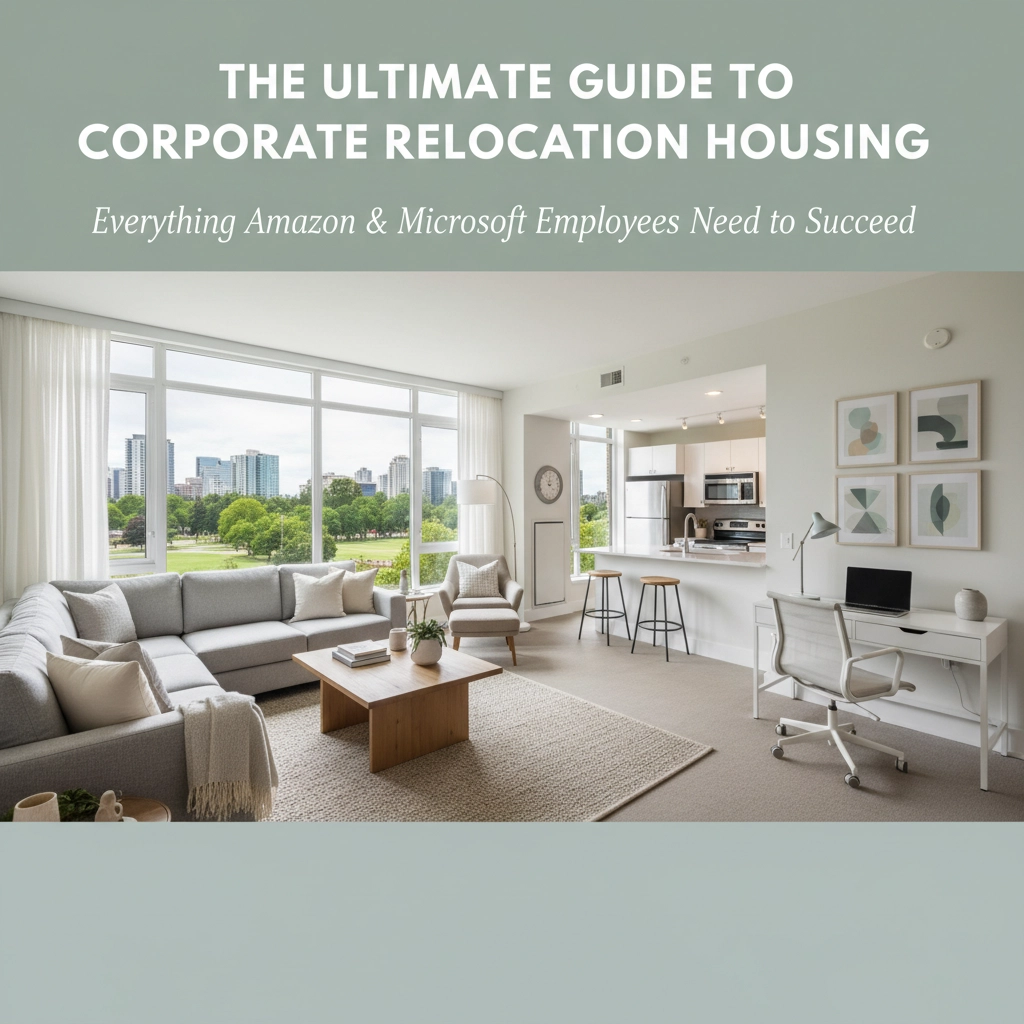
Roundtop Rentals’ top-floor Seattle apartment illustrates the type of setup that supports an extended stay: a dedicated workspace, high-speed WiFi, in-unit laundry, a full kitchen, parking, secure access, and city and mountain views. Those features serve professionals and corporate tenants, but they also address practical needs for residents displaced during a repair or reconstruction period.

A Strategic Opportunity for Property Managers
For property managers, insurance displacement should be treated as a specialized housing channel rather than an incidental booking source.
A strong program may include a current inventory sheet, accurate photographs, floor plans, amenity details, pet and accessibility policies, parking information, and clearly stated monthly pricing. It should also explain how extensions, billing, deposits, cleaning, and maintenance are handled.
The most useful inventory is not simply “furnished.” It is ready for a household to live well for one to six months without a long setup process.
That means providing:
- A functional kitchen
- Comfortable and durable furnishings
- A work-ready environment
- In-unit or convenient laundry
- Fast, dependable WiFi
- Parking or transit access
- Safe and well-maintained surroundings
- Responsive support throughout the stay
The same standards that appeal to corporate housing procurement teams and relocation coordinators can improve insurance placements. They create a consistent experience for residents while giving adjusters greater confidence in the housing recommendation.

Looking Ahead
The demand for mid-term housing in Seattle is being shaped by more than business travel and relocation. Insurance displacement is adding a purpose-driven segment that requires speed, flexibility, financial clarity, and genuine livability.
For adjusters and housing coordinators, the priority is to place residents in accommodations that support the claim timeline and preserve everyday stability. For property managers, the opportunity is to build reliable partnerships around well-maintained, fully furnished inventory.
In both Seattle and Bellevue, the most valuable housing providers will be those that understand the full placement process. They will offer more than an apartment. They will offer a clear agreement, a dependable point of contact, and a serene, functional home during an uncertain period.
Explore Roundtop Rentals’ premium furnished apartments and learn more about available rental options for corporate, healthcare, government, event, and insurance housing needs.
For more information, contact Roundtop Rentals at
admin@roundtop-rentals.com or (425) 584-5745