
When an organization prepares for a long-term project: whether it is a construction oversight in Bellevue, a healthcare residency in Seattle, or the upcoming logistics for the 2026 World Cup: one of the first hurdles is housing. Traditionally, the default has been the hotel. It is familiar, easily booked, and offers a standardized level of service. However, as assignments stretch from a few days into several weeks or months, the hotel model often begins to reveal significant financial and operational friction.
For procurement officers and HR managers, the choice between a hotel and corporate housing is not merely about a bed. It is a decision that impacts the project budget, the mental health of the team, and the administrative burden on the back office. This guide provides a balanced comparison of these two models for stays exceeding 30 days.
The Financial Threshold: Analyzing the Bottom Line
The most immediate difference between a hotel stay and a furnished apartment is the cost structure. Hotels operate on a nightly rate designed for transient travelers. Even with "long-term" corporate discounts, these rates remain significantly higher than the monthly inclusive pricing offered by mid-term housing providers.
In the Seattle and Bellevue markets, a standard mid-range hotel in a central location often costs between $250 and $400 per night. Over a 30-day period, this results in a monthly expense of $7,500 to $12,000 per person. In contrast, a fully furnished apartment through Roundtop Rentals typically ranges from $4,350 to $5,550 per month, all-inclusive of utilities, high-speed internet, and parking.
To visualize the scale of these savings, consider a five-person operations team deployed for six weeks.
- Hotel Cost: (5 people x 42 nights x $300 avg. rate) = $63,000.
- Corporate Housing Cost: (5 apartments x 1.5 months x $4,800 avg. rate) = $36,000.
In this scenario, selecting corporate housing saves the organization $27,000. When accounting for the inevitable "incidental" costs associated with hotels: such as daily $50 parking fees and expensive room service: the total savings often exceed $30,000.
Space, Routine, and "Hotel Fatigue"
Beyond the financial data, the human element of an extended assignment is the most frequent cause of project turnover. "Hotel fatigue" is a well-documented phenomenon where the lack of a kitchen, the absence of laundry facilities, and the cramped nature of a single room lead to diminished morale.
The Importance of a Full Kitchen
In a hotel, every meal is a logistical task. Staff are forced to eat out or order delivery for 90 consecutive meals a month. This is not only expensive but detrimental to health and routine. A furnished apartment provides a full kitchen with stainless steel appliances and proper cookware. The ability to prepare a home-cooked meal allows employees to maintain their normal dietary habits and regain a sense of autonomy.
Dedicated Workspace
Most hotel rooms offer a narrow desk that doubles as a vanity. For professionals who need to maintain peak productivity, this is insufficient. Corporate apartments, such as those in our Urban Retreat collection, feature dedicated workspaces.
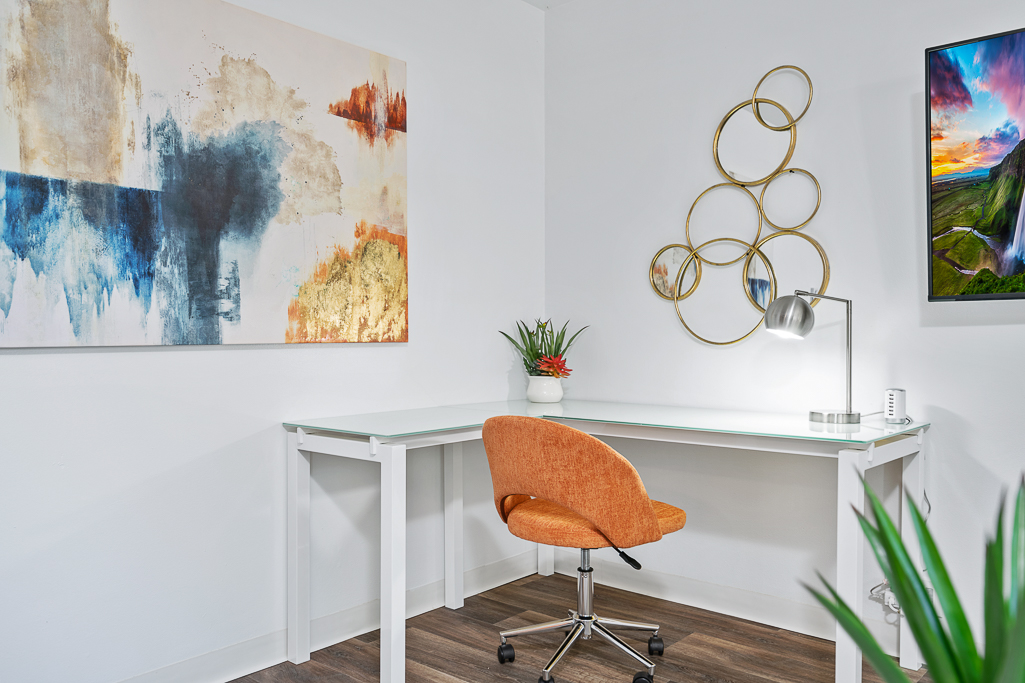
A separate desk with an ergonomic chair and high-speed WiFi creates a clear boundary between "work" and "rest," a distinction that is impossible to maintain in a 300-square-foot hotel room.
Operational Efficiency and Expense Management
For the procurement team, managing the logistics of a traveling crew can be an administrative nightmare. Hotels generate individual daily receipts, often with fluctuating rates and varying incidental charges.
Corporate housing simplifies this process through:
- Simplified Invoicing: One flat-rate monthly invoice per unit, covering rent, utilities, and internet.
- Team Cohesion: Housing a team in the same building or complex: such as our properties in Downtown Bellevue: allows for natural operational hubs. Teams can meet in common areas or share a meal, fostering a collaborative environment that scattered hotel rooms cannot provide.
- Local Support: Unlike a massive hotel chain, a local provider like Roundtop Rentals offers a single point of contact for maintenance or local recommendations, ensuring a more personalized and responsive service.
Case Study: World Cup 2026 Logistics
The upcoming World Cup matches at Seattle Stadium provide a perfect example of why housing strategy matters. With six matches scheduled between June 15 and July 6, media crews, security details, and event operations staff will be in the city for at least 45 to 60 days.
During global events, hotel rates in Seattle will likely skyrocket, with many establishments implementing minimum stays and non-refundable deposits. By securing corporate housing early, organizations can lock in a fixed rate and ensure their staff is located in neighborhoods like Beacon Hill, which offers direct light rail access to the stadium without the chaos of the immediate downtown core.
When Hotels Still Make Sense
While corporate housing is the superior choice for stays over 30 days, hotels still have a place in the corporate travel ecosystem. A hotel remains the logical choice for:
- Short-term stays: Assignments lasting less than 14 days.
- Single-night transitions: When a staff member arrives late at night before moving into their long-term apartment the next morning.
- High-frequency turnover: When different staff members are rotating through a city for only 48 hours at a time.
Corporate housing is designed for stability and "living," whereas hotels are designed for high-frequency "staying."
The Psychological Impact of a "Real Home"
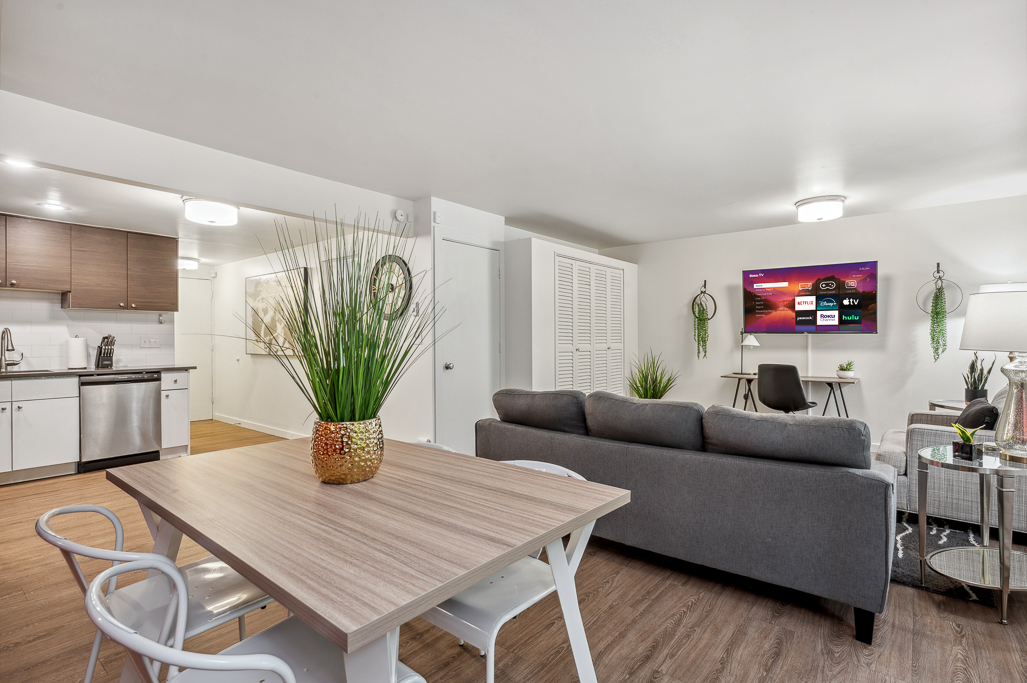
The refined decor and residential feel of a furnished apartment provide a psychological sanctuary. Entering a space with a sofa, a dining table, and large windows that offer natural light: rather than a generic hotel corridor: helps employees decompress.

Privacy is also a major factor. In corporate housing, there is no daily housekeeping knocking on the door or noisy neighbors in the hallway at all hours. The security of a residential building provides a level of tranquility that is essential for staff working high-pressure roles, such as healthcare professionals or event coordinators.
Summary of Comparison
| Feature | Corporate Housing (30+ Days) | Hotel (30+ Days) |
|---|---|---|
| Monthly Cost | $4,350 – $5,550 (All-inclusive) | $7,500 – $12,000+ |
| Living Space | 500 – 800 sq. ft. (Full Apartment) | 250 – 350 sq. ft. (Single Room) |
| Meals | Full Kitchen / Home Cooking | Room Service / Restaurants |
| Laundry | In-unit or on-site (Free/Low cost) | Hotel service (Charged per item) |
| Billing | One monthly invoice | Daily line items and taxes |
| Atmosphere | Residential / Quiet | Transient / High-traffic |
Planning Your Next Deployment
As you look toward 2026 or your next large-scale corporate assignment in the Pacific Northwest, we invite you to evaluate your housing strategy through the lens of both fiscal responsibility and employee retention. A refined, well-managed home base is often the difference between a successful project and an exhausted workforce.
Discover how we can support your team's next assignment by exploring our available properties or reading more about our specialized services for event staff.
For more information, contact Roundtop Rentals at admin@roundtop-rentals.com or (425) 584-5745.

